Sviatki divination
Eugene OneginSviatki divination is the fortune-telling practice associated with the Russian Holy Nights between Christmas Eve and Twelfth Night. In the Larina household it gathers young women around songs, water, a ring, melted wax, and a mirror, turning winter sociability into an attempt to read the future. The custom gives Tattiana’s inward apprehensions a ritual form: its signs promise knowledge, but the songs can point toward death as readily as marriage.
Season and Household Setting
The practice belongs to the misty evenings before Twelfth Night, when the surrounding winter landscape is marked by sledging and snow glowing rosy at sunset. The Larinas keep the seasonal custom year after year. Servants gather, and the young women tell fortunes, making divination a recurring household occasion rather than a private invention of Tattiana’s. The repeated observance joins domestic routine to a shared calendar of expectation.
The poem places this scene within an atmosphere of youthful hope. As Twelfth Night approaches, the narrator calls attention to the festive evenings and to the inexperienced young, for whom hope can still deceive with a childlike lisp. Divination belongs to that double register: it is a game of communal anticipation, yet the desire to know what is coming makes its signs emotionally consequential.
Methods and Signs
One method assembles the young women around a dish or basin of water containing a ring. Each takes a turn drawing out the ring while the others sing the dish songs, or podbliudni pessni. The songs are popularly believed to indicate the fortune of the person whose turn it is. The ritual thus distributes interpretation among the group: one girl draws, the others sing, and a conventional refrain supplies the supposed meaning.
The signs do not all promise the same future. A refrain can foreshadow death, while the kashourka, or kitten song, indicates approaching marriage. Its opening image is a cat asking a kitten to sleep on the stove. The contrast makes the ceremony more than a reassuring bridal game: within the same seasonal practice, a song may turn anticipation toward danger or toward a wedding.
Tattiana also watches melted wax poured into water, studying the shape it takes as a possible clue to a mystery. Here the sign is not a sung prediction but an outline to be read. The method leaves interpretation open: wax forms a figure, and Tattiana treats its contour as potentially meaningful. The poem sets this visual reading beside the ring ceremony, showing several ways in which the gathering tries to make uncertain futures legible.
Tattiana’s Participation
Tattiana approaches the customs with particular curiosity. She watches the wax in the water and seeks a clue in its outline; later, her hand takes its turn at the water-and-ring ritual. Her participation puts her within the shared practice of the young women, but the poem gives her acts a concentrated inwardness: the common signs become occasions for her own search for what may come.
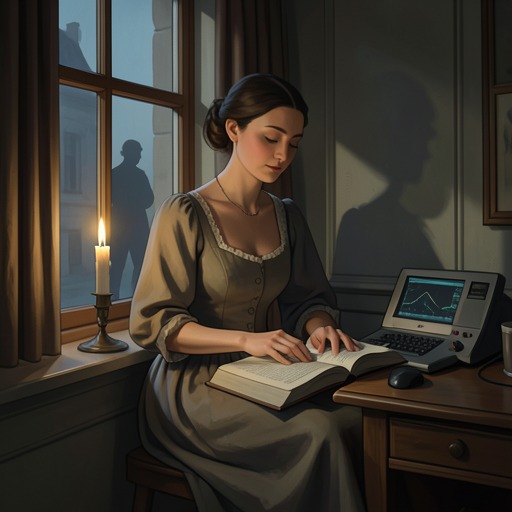
The divination extends into the private space of sleep. A little virgin mirror is placed beneath her downy pillow, and the scene closes on the stillness of the room as Tattiana sleeps. The mirror carries the custom from the gathered circle into solitary expectation. The sequence moves from communal singing and visible signs to an object hidden beneath the pillow, narrowing the social ritual around Tattiana herself.
Narrative and Cultural Significance
The custom supplies a folk framework for the poem’s treatment of uncertainty. It presents the future as something that might be glimpsed through familiar objects and inherited procedures, but it does not make those signs secure knowledge. Water distorts the ring’s setting, wax offers an outline requiring interpretation, and the songs range from the prospect of marriage to an omen of death. The ritual’s attraction rests in the very uncertainty it cannot resolve.
Its recurring winter setting also gives the practice a collective dimension. The Larinas’ annual gathering, the servants’ participation, and the young women’s turns connect private hopes to household custom. Tattiana’s curiosity is not detached from this social world: she seeks meaning through its shared forms, then carries the ritual’s promise into the solitude of sleep. Sviatki divination therefore joins seasonal festivity to foreboding, and communal play to the more personal desire to know what fate may bring.